
Solutions

Forui’s beneficiation solutions are mainly for the following materials: Non-metallic Ore, Ferrous Metal Ore, Non-ferrous Metal Ore, and Smelting Slag, etc.

Do Incineration Slag Treatment Plants Need Gravity Separation Equipment?

In incineration slag treatment projects, questions about gravity separation equipment are frequently raised during process design. Jig machines and shaking tables are traditionally associated with mineral processing, so it is natural for project owners and engineers to ask whether these devices are truly necessary for slag treatment—or if magnetic separation alone is sufficient. The answer […]

Do Incineration Slag Treatment Plants Need Gravity Separation Equipment? Read More »

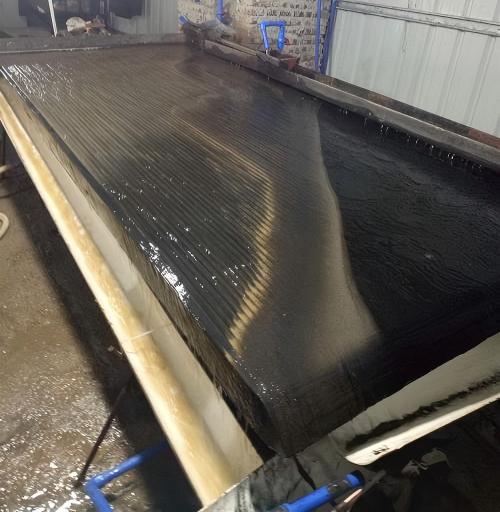
Operating a Shaking Table Successfully: Practical Methods to Improve Gravity Separation Performance

In gravity separation of fine and medium-sized heavy minerals, the shaking table remains one of the most effective tools when separation accuracy matters more than throughput. However, the performance of a shaking table depends far more on how it is operated than on the machine itself. Many plants install shaking tables but fail to achieve

Operating a Shaking Table Successfully: Practical Methods to Improve Gravity Separation Performance Read More »

Magnetic Separation in Metal Recovery from Waste Incineration Slag

Metal recovery is one of the core objectives in the resource utilization of municipal solid waste incineration slag. Incineration slag typically contains a considerable amount of metal components, ranging from large iron pieces to fine iron powder. If these metal materials are not effectively recovered, they not only result in resource losses but may also

Magnetic Separation in Metal Recovery from Waste Incineration Slag Read More »

The Role of Trommel Screens in Incineration Slag Classification and Treatment

Incineration slag treatment is a complex process that involves handling highly heterogeneous materials. Unlike natural ores or construction aggregates, incineration slag contains a wide range of particle sizes, irregular shapes, residual metals, mineral fragments, and unburned residues. Effective classification at the early stages of processing is therefore essential for ensuring stable operation and high recovery

The Role of Trommel Screens in Incineration Slag Classification and Treatment Read More »

Shaking Table Separation: Why It Remains Essential for Fine Gravity Beneficiation

When processing high-density minerals such as tin, tungsten, and tantalum–niobium ores, mineral processing plants often prioritize stable recovery, clear separation, and controllable operating costs over maximum throughput. As ore grades decline and valuable minerals become increasingly fine-grained, plants must recover fine heavy particles more reliably than ever before. For this reason, the shaking table continues

Shaking Table Separation: Why It Remains Essential for Fine Gravity Beneficiation Read More »

How Incineration Slag Is Formed and Converted into Reusable Eco-Friendly Materials

At a certain moment each day, municipal sanitation workers collect household waste in an orderly manner and transport it by garbage trucks to municipal waste-to-energy incineration plants. When mechanical arms feed various types of household waste into the incinerator, incineration slag gradually takes shape. As the final residue of the waste incineration process, slag becomes

How Incineration Slag Is Formed and Converted into Reusable Eco-Friendly Materials Read More »

Incineration Slag Treatment for Resource Recovery

Municipal solid waste incineration generates a large volume of incineration slag containing ferrous metals, non-ferrous metals, and mineral aggregates. Without proper treatment, this material places long-term pressure on landfill capacity and environmental compliance. With appropriate processing and separation technologies, incineration slag can be transformed into valuable recyclable resources and eco-friendly construction materials. We provide complete

Incineration Slag Treatment for Resource Recovery Read More »

Fluorite Flotation 02:Barite-Fluorite Ore Flotation

1. Barite-fluorite Ore Flotation Process Barite-type fluorite ores primarily contain barite as a gangue mineral (usually 10-40%) and are often associated with minor sulfide minerals (pyrite, galena, sphalerite), with some deposits containing a higher quartz content. Given the similar floatability of barite and fluorite, a flotation process involving the preferential bulk flotation of fluorite and

Fluorite Flotation 02:Barite-Fluorite Ore Flotation Read More »