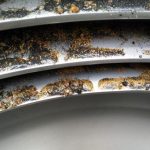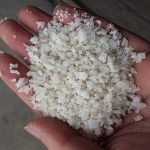

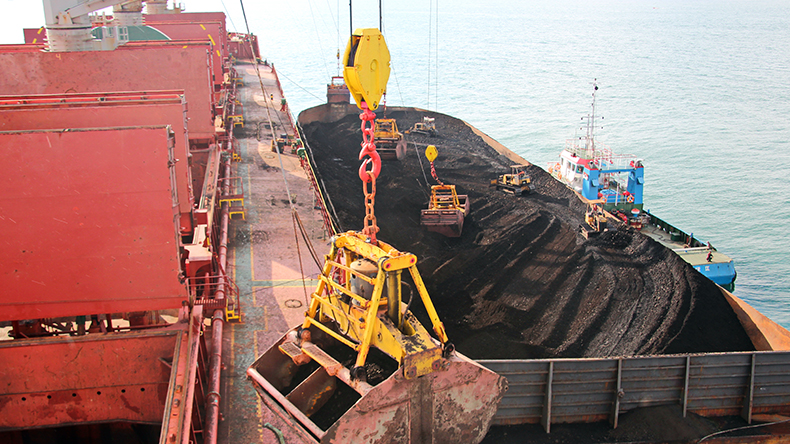
At bulk cargo ports, mixed minerals such as iron ore, aluminum ore, and coal are often handled within the same terminal areas. During unloading, conveying, and stockpiling operations, material spillage and overlap are unavoidable. Residual materials at transfer points further contribute to mixing. Over time, these factors result in mixed bulk materials accumulating in port stockyards.
These port mixed minerals and ores are not intentionally blended; they are a natural outcome of high-throughput bulk handling operations.
Why Separation Is Necessary at Port Mixed Ore
Once different ores are mixed, they can no longer be directly reused or traded as individual products. Without separation, valuable minerals are downgraded, disposal volumes increase, and stockyard management becomes inefficient.
Separation is therefore required to recover usable mineral fractions, reduce handling and disposal costs, and improve overall operational efficiency at the port.
Gravity Separation as a Practical Processing Method
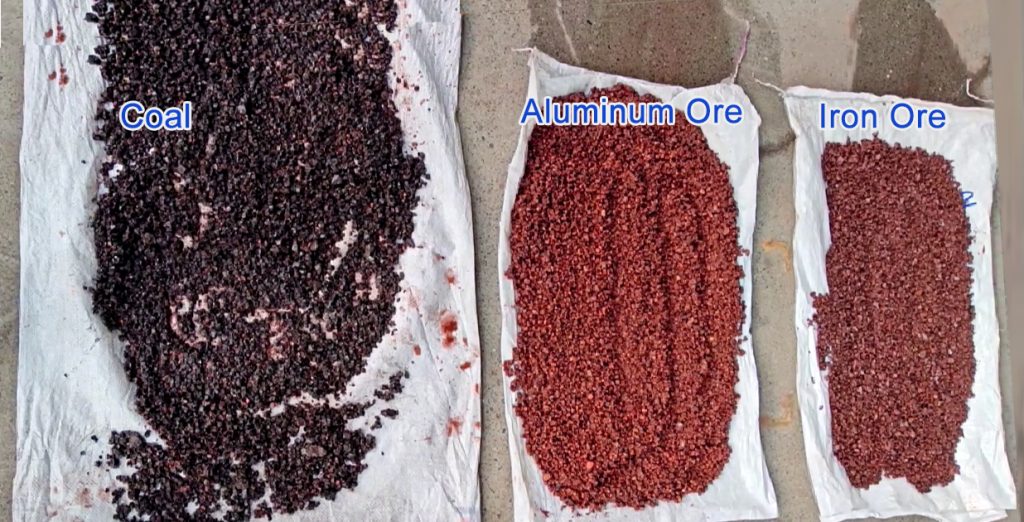
Port mixed minerals typically consist of minerals with clear density differences, such as iron ore compared with coal and most aluminum ores. This physical contrast makes gravity separation a practical and reliable processing option.
Unlike chemical or flotation methods, gravity separation does not require reagents and operates with a relatively simple process flow, making it well suited to port environments where feed composition may vary and operational stability is essential.
Jigging Technology for Port Mixed Bulk Materials
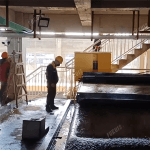
Among gravity separation methods, jigging technology is particularly suitable for port applications. A jig separator uses pulsating water flow to stratify mixed particles by density, allowing high-density and low-density materials to be discharged separately in a continuous process.
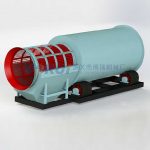
Jig separators perform well when handling coarse and irregular materials commonly found in port stockpiles. They are mechanically simple, require relatively low maintenance, and can operate reliably under fluctuating feed conditions. In practical systems, jig separators are typically combined with dewatering screens to reduce product moisture and prepare separated materials for transport or storage.
Operational Value for Ports and Terminals
By applying a gravity-based separation system centered on jigging, ports can convert mixed stockpiles from an operational burden into a recoverable resource. Valuable mineral fractions can be reclaimed, rehandling and disposal costs can be reduced, and stockyard organization can be improved.
The system can be flexibly configured for temporary use or permanent installation, depending on port layout and operational requirements.
Conclusion
Port mixed minerals are an inevitable result of modern bulk cargo handling, but they do not need to be treated as waste. With a properly designed gravity separation process—especially one based on jigging technology—these minerals can be efficiently separated and reused.
As a specialist in gravity separation equipment and solutions, Forui provides proven jig-based systems designed to meet the practical demands of port operations and bulk minerals handling.